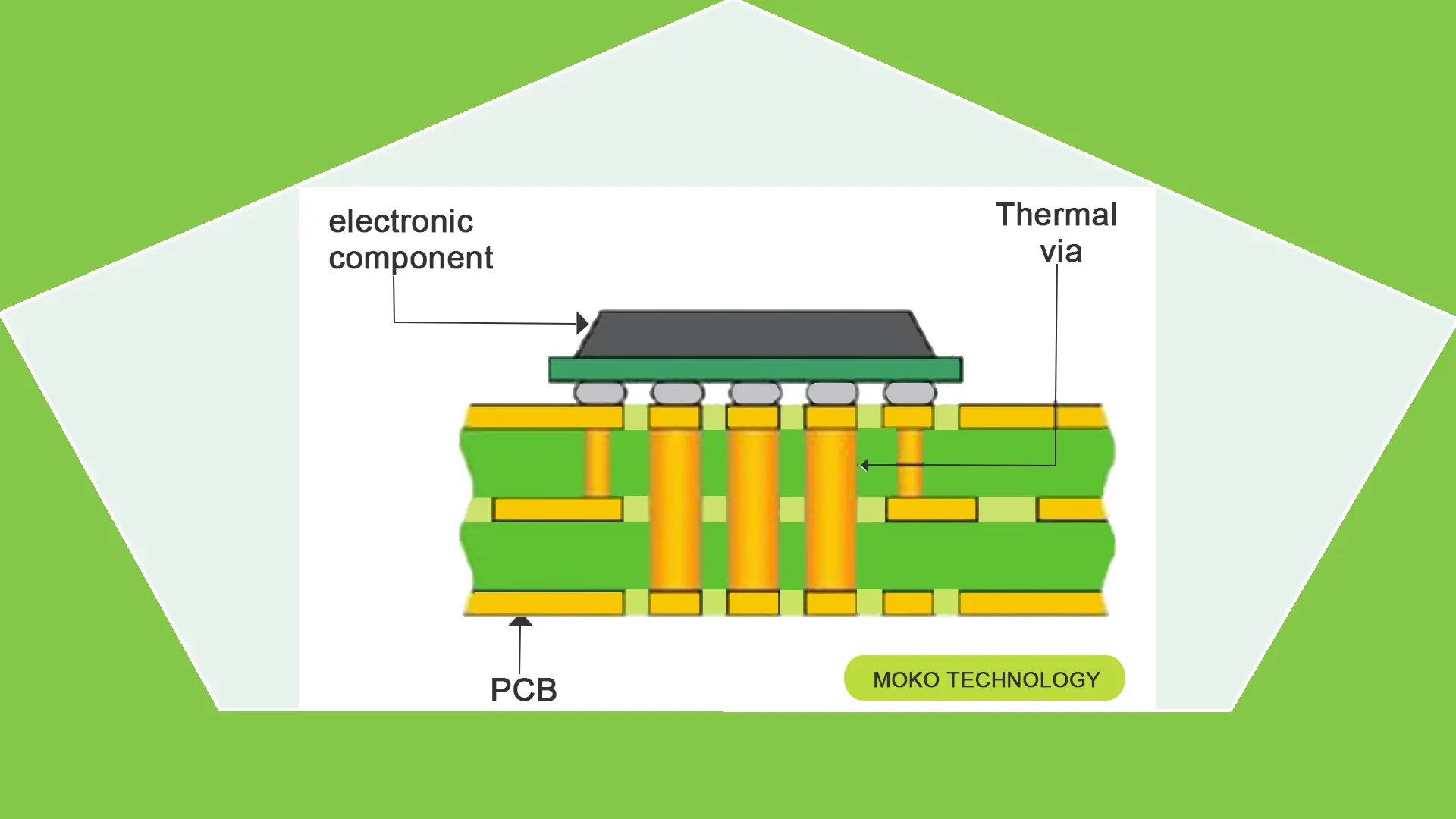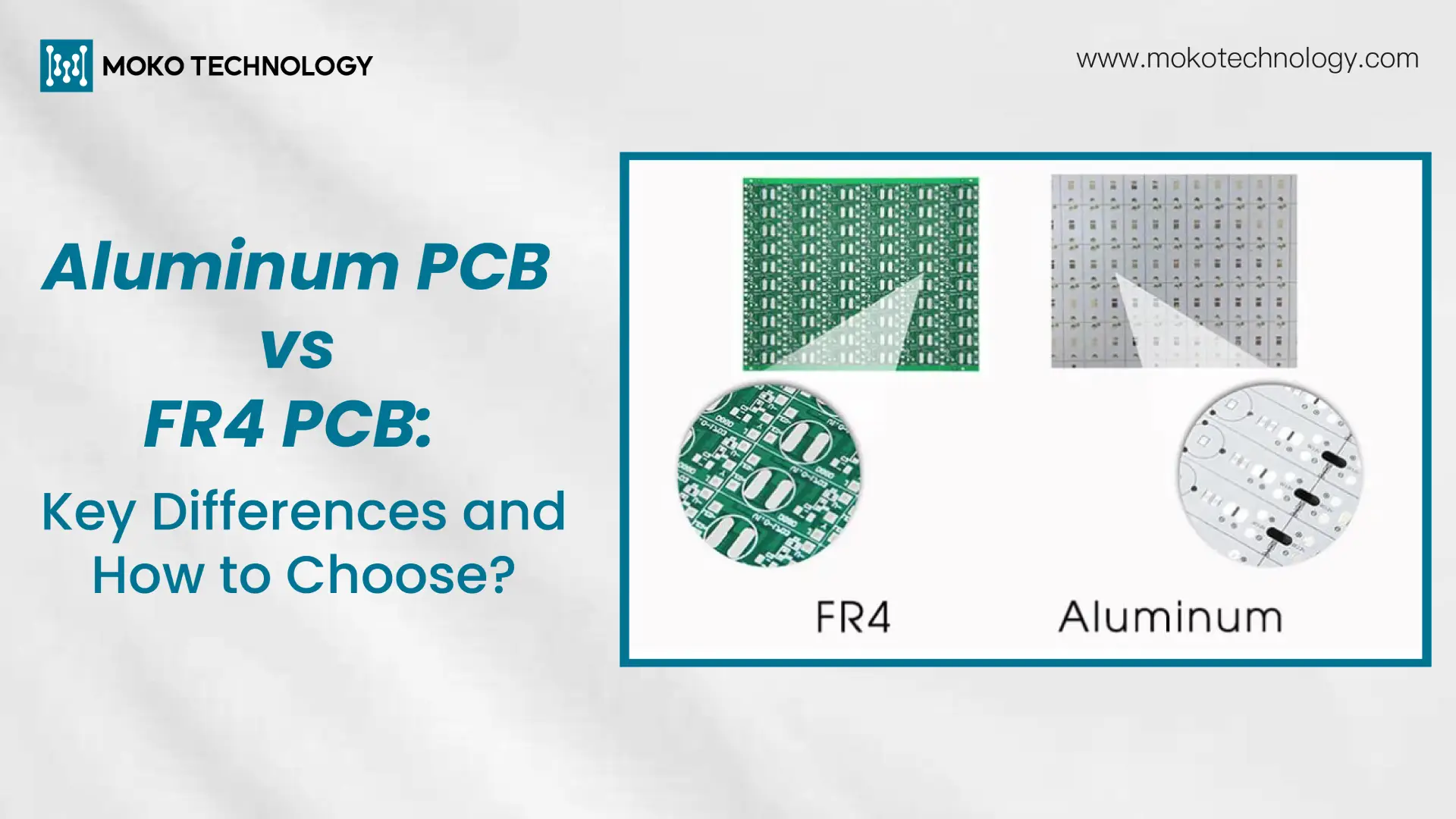
Choosing between Aluminum PCB and FR4 PCB usually comes down to one key question: how much heat does your application require? Aluminum PCBs are primarily recommended for high-power and heat-generating electronic products, while FR4 is preferred for most electronic products.
Thermal performance isn’t the only difference, though. The cost, electrical insulation, mechanical properties, manufacturing processes, and typical applications of aluminum and FR4 PCBs also differ. In this guide, we compare Aluminum PCB vs FR4 PCB across different aspects to help you decide which of the two is best for your project.
What Is an Aluminum PCB?
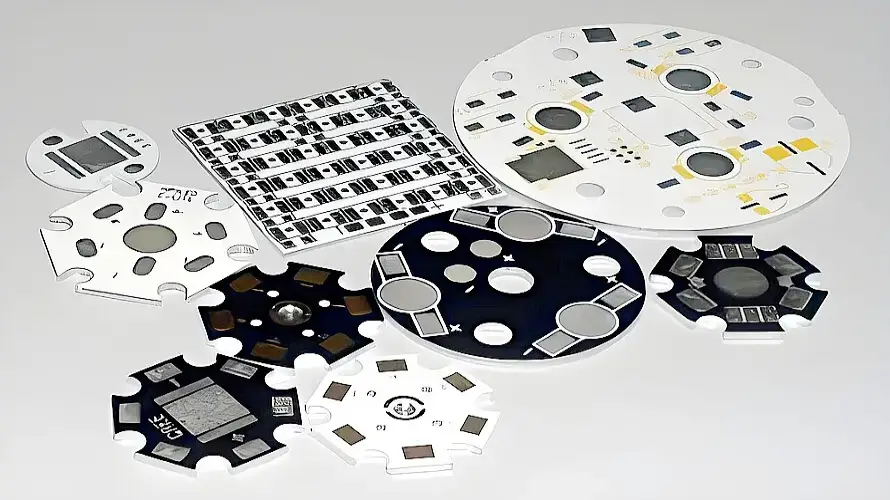
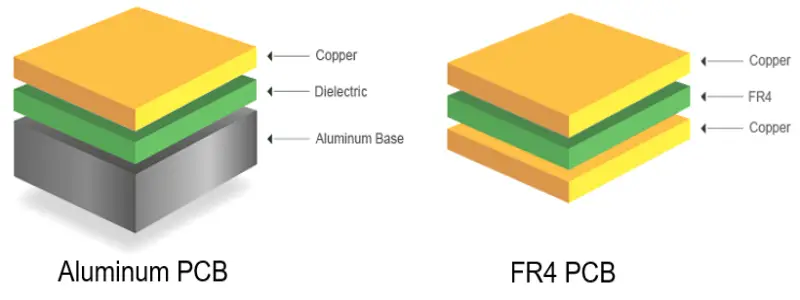
An aluminum PCB, a type of metal core PCBs(MCPCB), refers to a board that uses aluminum material as the substrate material, instead of using traditional fiberglass or plastic substrate. It consists of 3 layers: a thermally conductive aluminum base layer, an insulating dielectric layer, and a copper circuit layer. Generally, aluminum PCBs are single-sided, though double-sided versions can also be fabricated. Due to the unique properties of the material, manufacturing multilayer aluminum PCBs is difficult and challenging.
Pros and Cons of Aluminum Circuit Boards
Pros:
- High thermal conductivity, efficiently transfers heat in high power applications like LED lighting and power supplies, preventing overheating and extending reliability and lifespan of components
- Lightweight yet durable, strong on the mechanical aspect without adding much weight
- Very resistant to corrosion, suitable for harsh environments
Cons:
- Setting up special equipment to handle the metal base can be expensive, resulting in increased initial cost and lead time
- Flexibility is not as good as some other materials, not suited for designs requiring flexible or highly compact layouts
What Is an FR4 PCB?
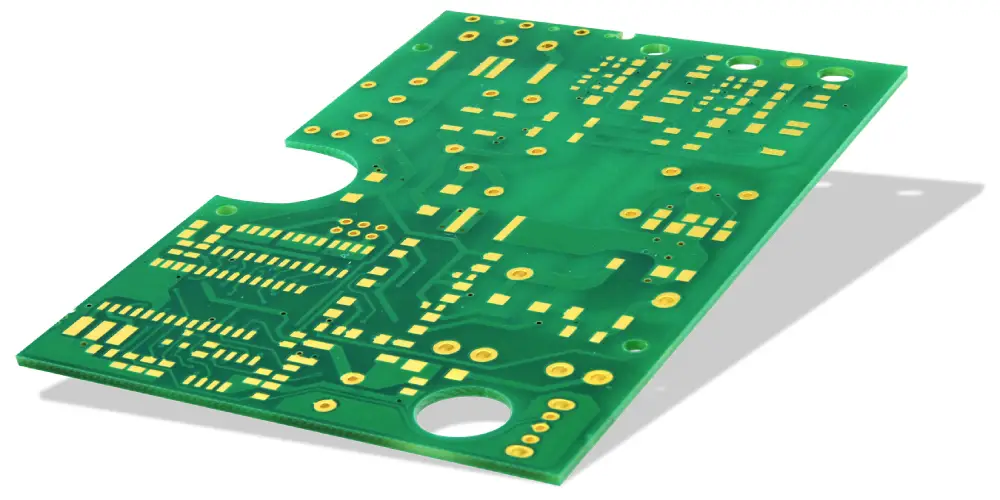
FR4 PCB or Flame Retardant 4 Printed Circuit Board is made from FR4 material, a composite of woven fiberglass cloth impregnated with epoxy resin. This produces an excellent board, which is flame resistant and durable, yet has very good electrical insulation and high mechanical strength. FR4 is a NEMA-designated material grade widely used in electronic products. Many FR4 materials meet the UL 94 V-0 flammability rating, making them a reliable choice for a wide range of electronic applications.
Pros and Cons of FR4 Circuit Boards
Pros:
- Versatile, good for a multitude of applications from consumer electronics to automotive to telecommunications
- Relatively low production cost, making it a popular choice for mass production
Cons:
- Lower thermal conductivity than aluminum, can overheat in high power applications
- More prone to damage from physical stress or environmental factors compared to aluminum
6 Key Differences between Aluminum PCB and FR4 PCB
Let’s dive deep into the Aluminum PCB vs FR4 PCB comparison by examining their key differences:
- Thermal Management
Aluminum PCBs boast an incredible ability to conduct heat, transferring heat about 600x better than FR4 boards. For heat intensive systems such as LED systems, drive controllers and power management units, aluminum based boards are the preferred choice that offer superior thermal management capability. In contrast, the low thermal conductivity of FR4 boards restricts their use in high -heat situations.
- Coefficient of Thermal Expansion (CTE)
When PCBs heat up and cool down during use, their materials expand and shrink. FR4 boards have a thermal expansion rate of 12-24 ppm/°C, which is quite different from the copper traces (17 ppm/°C) used on them. This difference can cause the board to break, crack, or have damaged traces. Aluminum boards expand at about 24 ppm/°C, which is closer to copper’s rate, making them less likely to have these problems.
- Layer Structure
The FR4 technology can accommodate the different layer configurations within a range of single layer to complex multilayer designs. Aluminum boards, however, utilize a specific three-layer structure, which constrains vertical integration options. However, the aluminum based structure is particularly effective at handling high temperatures.
- Mechanical Strength
The metallic foundation of aluminum PCBs enhances the structural integrity compared with FR4. Enabling larger board sizes and higher component densities, these features make them well suited for applications requiring demanding performance in the telecommunications, industrial automation and vehicle electronics areas.
- Board Thickness
FR4 boards have layering capabilities that can reasonably vary the board thickness. On the other hand, aluminum PCBs are limited by their three layer structure, usually being around 0.8mm to 4mm in thickness with the metal core being a significant portion of this measurement.
- Dielectric Properties
With ceramic reinforced polymer, FR4 offers superior electrical isolation properties. FR4 PCBs are featured with low energy loss factor of approximately 0.02 at 1MHz. While for aluminum PCBs. the insulating material used are various, including polyimide or aluminum oxide and they are selected according to the operating frequency requirement.
Aluminum PCB vs FR4 PCB: Quick Comparison Table
| Feature | Aluminum PCB | FR4 PCB |
| Substrate | Aluminum base + dielectric layer + copper | Woven fiberglass + epoxy resin |
| Thermal Conductivity | ~1–8 W/m·K (up to ~600x higher than FR4) | ~0.3 W/m·K |
| CTE | ~24 ppm/°C | 12–24 ppm/°C |
| Layer Structure | Typically single-sided (3-layer); multilayer difficult | Single to complex multilayer |
| Mechanical Strength | High rigidity, strong structural support | Good strength, more prone to physical stress damage |
| Board Thickness | ~0.8mm–4mm (metal core dominant) | Flexible range, thinner options available |
| Flexibility | Rigid, not suited for bending/compact designs | Better suited for flexible circuit designs |
| Cost | Higher (material + processing cost) | Lower, cost-effective for mass production |
| Weight | Lightweight relative to strength | Heavier for equivalent rigidity |
| Best For | LED lighting, power supplies, high-heat applications | Consumer electronics, telecom, general-purpose multilayer designs |
Considerations When Choosing PCB Materials
When evaluating Aluminum PCB vs FR4 PCB options, consider these crucial factors:
- Power Dissipation: For designs with high power components that generate a lot of heat, aluminum PCBs are the first choices thanks to their excellent thermal conductivity.
- Space Constraints: Aluminum PCBs can be a space saver at the system level; they are often able to reduce or eliminate the need for additional heatsinks, fans, and other cooling components — an important consideration in the design of space constrained products where every millimeter matters.
- Flexibility Requirements: If your design needs flexibility or complex bending, traditional FR4 board may be better as it offers greater flexibility than rigid aluminium PCBs.
- Cost Considerations: Aluminum PCBs cost more than traditional FR4 PCBs; therefore, it is important to assess the cost before making a choice, ensuring it stays within the budget.
- Environmental Factors: In moisture or harsh environmental conditions, aluminum PCBs offer higher tolerance than FR4 circuit boards, making them a more durable option for outdoor or industrial use.
- Layer Complexity: FR4 is a more practical option for high-density, multilayer designs. Aluminum PCBs are normally single- or double-sided and are therefore less suitable for high-density, multilayer designs.
Common Applications of Aluminum PCB
- LED lighting systems
- Power supplies and converters
- Automotive electronics
- Industrial control systems
- High-temperature environments
- Applications requiring enhanced durability
- Systems with significant thermal loads
Common Applications of FR4 PCB
- Consumer electronics
- Telecommunications equipment
- Low-power electronics
- Standard multi-layer designs
- Projects requiring cost-effective solutions
- Flexible circuit designs
Aluminum PCB vs FR4 PCB: Frequently Asked Questions
- Does aluminum PCB cost more than FR4 PCB?
Yes. The cost of aluminum PCBs is typically higher than that of FR4 because the aluminum base requires more specialized equipment for processing and has a higher material cost than FR4. But in high-power applications, the added thermal performance may outweigh the price due to increased reliability and lifespan. - Which is better for LED lighting, aluminum PCB or FR4PCB?
Aluminum PCBs are the preferred option for LED lights. Their thermal conductivity is much higher than that of FR4, which helps to dissipate the heat produced by the LEDs more efficiently. - Can FR4 PCBs handle high-power applications?
FR4 PCBs’ relatively lower thermal conductivity makes them less suitable for high-power/high-heat applications, but they are suitable for moderate power loads. Aluminum PCBs are a safer choice for heat-intensive designs. - Which PCB material is more flexible, aluminum or FR4?
FR4 provides much more design flexibility, such as flexible circuits, bending, and more. Aluminum PCBs are stiff because of the metal core and are not suitable for designs that demand flexibility or highly compact layouts.
Final Thoughts
Both aluminum and FR4 PCBs have their place in modern electronics. FR4 is still the most common material used for general-purpose applications because of its versatility and cost-effectiveness, while aluminum PCBs are especially useful when heat dissipation is critical. Choose the one that can meet the thermal, electrical, mechanical, and cost requirements of your application.
If you still can’t determine which PCB type is suitable for your project, MOKO Technology can help. We have more than 20 years of PCB manufacturing experience, and our production of FR4 and aluminum PCBs can meet the needs of various designs and applications. Contact us to discuss your project.