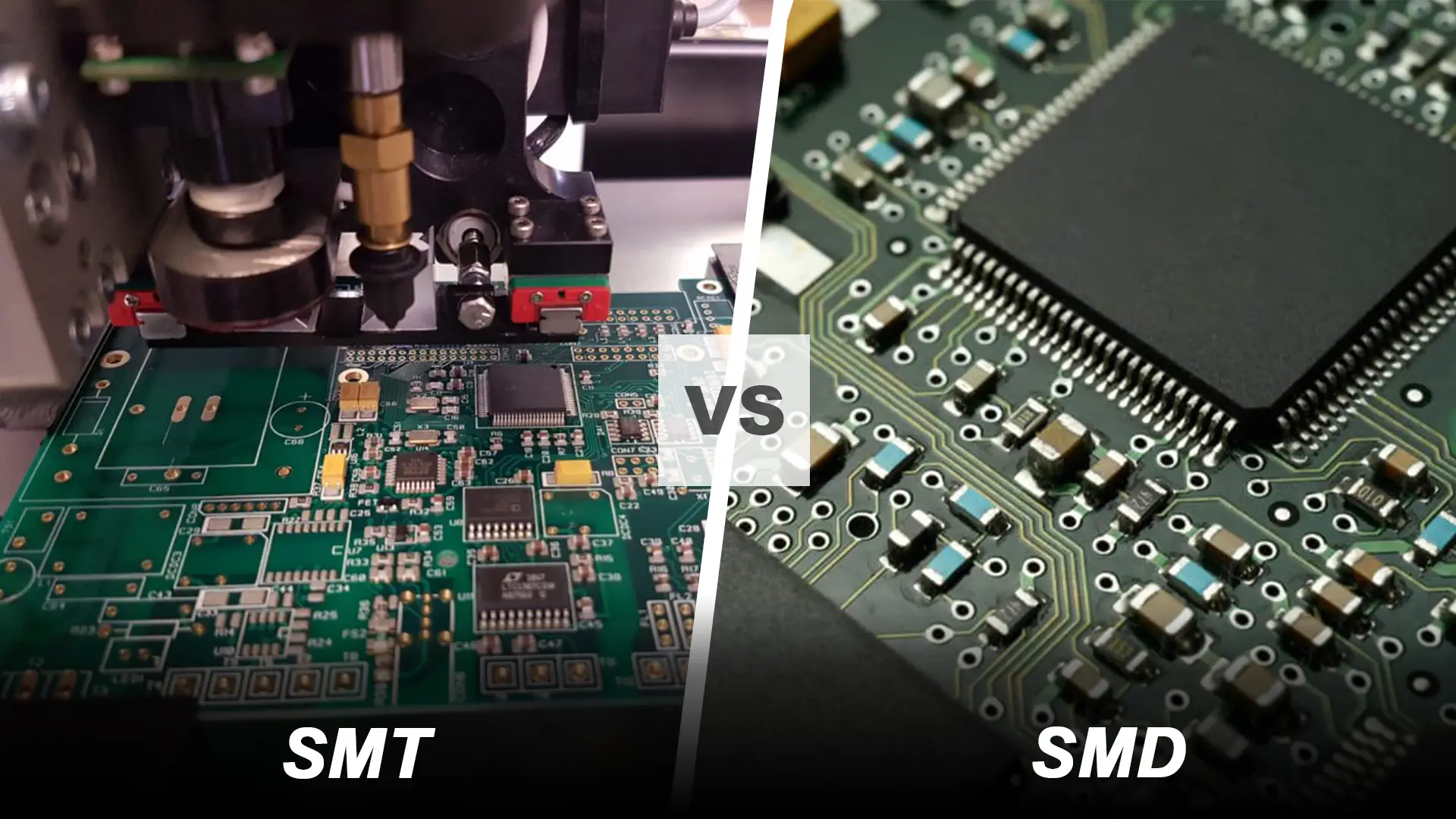
SMD and SMT are usually mentioned together in PCB assembly. Although they differ by only one letter, they represent different things. SMD (Surface Mount Device) refers to electronic components, while SMT (Surface Mount Technology) is the method used to mount electronic components directly onto the surface of PCBs. In this article, we will explain what SMD and SMT mean, how they work in PCB assembly, and the key differences between them.
SMD vs SMT: Key Differences
First, let’s take a quick look at SMD vs. SMT in PCB assembly. The table below highlights the key differences between them:
| Feature | SMD (Surface Mount Device) | SMT (Surface Mount Technology) |
| Nature | Physical object | Process/Methodology |
| Role | Provides the electronic components used in circuit boards | Provides the process used to assemble those components |
| Focus | Component design and miniaturization | Efficient and automated PCB assembly |
| Relationship | SMD components are designed to be mounted using SMT processes | SMT processes are used to place and solder SMD components |
What Is SMD (Surface Mount Device)?
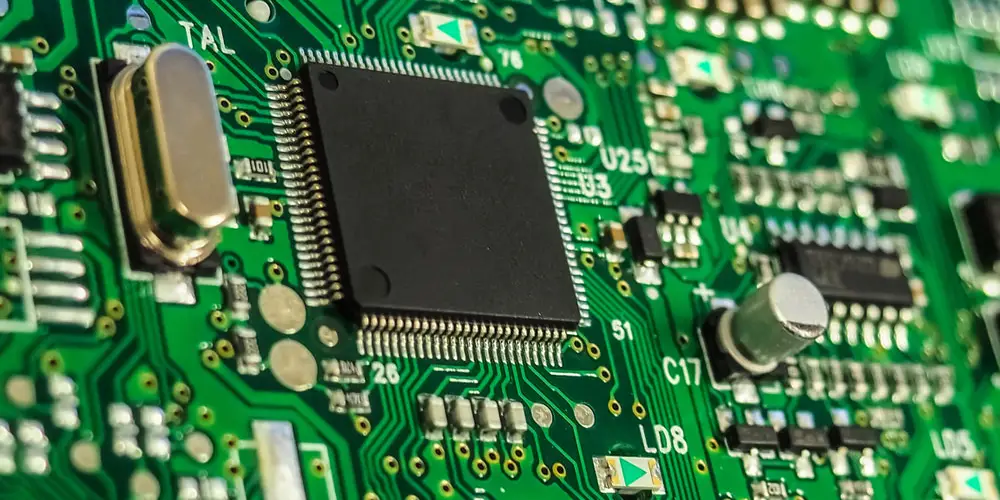
SMD (Surface Mount Device) is an essential type of electronic component in modern electronics manufacturing. Unlike traditional through-hole components — which require drilling holes through the PCB — SMDs are designed to be mounted directly onto the board surface.
This innovation enables more compact and efficient assembly. By fitting more circuits onto a compact board, SMDs allow for faster and more cost-effective PCB production.
Common Types of SMD Components
Below are some of the main types of SMD electronics components:
| Component Type | Function | Examples |
| Resistors | Control electrical current | Chip resistors, metal film resistors |
| Capacitors | Store electrical charge and regulate voltage in circuits. | Ceramic, tantalum capacitors |
| Inductors | Store energy in magnetic fields | Wirewound, ferrite bead inductors |
| Transistors | Amplify or switch electronic signals and power | MOSFETs, BJTs, IGBTs |
| Diodes | Allow current to flow in one direction | Zener, Schottky diodes |
| Integrated Circuits | Perform complex electronic functions | Microprocessors, regulators |
| Quartz Crystals | Provide timing signals | SMD crystal oscillators |
| LEDs | Produce light | Indicator LEDs |
| Connectors | Provide detachable connections | USB, HDMI connectors |
Further reading- Circuit Board Components: A Comprehensive Guide
Key Characteristics of SMD
SMD components offer several advantages in modern PCB assembly:
Space Efficiency: SMD components are compact and can be placed closer together on the PCB, allowing for higher component density and smaller PCB sizes.
Lightweight: SMD components are generally lightweight, making them suitable for portable and miniaturized devices.
Lower Profile: SMD Electronics components are designed with a reduced height, allowing them to be positioned in close proximity to the surface of the PCB. This is crucial in slim devices where component height is a concern.
Improved Electrical Performance: SMD components have shorter lead lengths and reduced parasitic capacitance and inductance. This results in enhanced high-frequency performance and signal integrity.
Automated Assembly: SMD components can be mounted on PCBs using pick-and-place machines, allowing for automated and high-speed assembly processes. This increases efficiency and reduces manufacturing costs.
Versatility: SMD components come in an array of shapes, sizes and types. This diverse selection allows for incredibly flexible circuit design compared to the limited options with old-fashioned through-hole parts.
What Is SMT (Surface Mount Technology)?
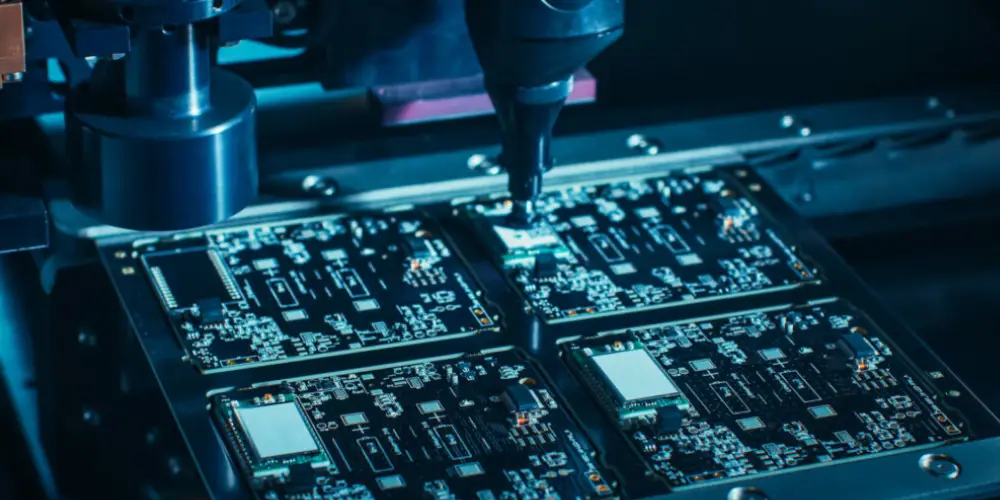
SMT stands for Surface Mount Technology, which is a PCB assembly technique of mounting electronic component to the surface of the printed circuit board. By using this method, SMD components can be mounted and soldered on the PCB without inserting leads into drilled holes.
SMT allows for higher component density as compared to traditional through-hole technology, and allows assembly to be performed faster and more efficiently. SMT machines such as pick-and-place machines and reflow ovens enable manufacturers to assemble large quantities of circuit boards quickly and precisely.
Surface Mount Technology (SMT) Process
The surface mount technology assembly process involves four key steps:
- Solder Paste Printing- The SMT machine aligns a stencil over the PCB and uses a squeegee to spread solder paste through the stencil’s holes onto the PCB’s solder pads.
- Component Placement – A pick-and-place machine accurately positions the tiny SMD components on the PCB, using the solder paste to temporarily adhere them.
- Reflow Soldering- This involves heating the solder paste to a semi-liquid state, which needs to be completely melted and solidified to ensure strong and durable solder connections. Reflow soldering, with its precise temperature control and even heat distribution, is commonly used in surface mount assembly to reliably solder delicate components like BGAs and QFNs.
- Testing and Inspection – After assembly, manufacturers conduct various inspections to verify soldering quality, checking for proper alignment, solder bridges, shorts, and more. This process encompasses a combination of manual scrutiny, AOI, and various other methods.
The video below demonstrates a typical SMT assembly process in a PCB manufacturing environment.
Advantages of SMT Assembly
Higher Component Density: SMT technology enables placing components on both sides of the circuit board, maximizing the use of available space and allowing for a higher density of components.
Increased Speed and Efficiency: Automated SMT PCB assembly enables swift and efficient production processes, thanks to its high level of automation. Modern pick-and-place machines can place thousands of components per hour, significantly speeding up the assembly process.
Cost-Effectiveness: While initial setup costs for SMT PCB assembly can be high, the high-speed, automated production and reduced material costs for smaller components often result in overall cost savings, especially for large production runs.
Design Flexibility: Surface mount assembly provides greater design flexibility, allowing engineers to create innovative and intricate circuit designs, which might not be possible or practical with through-hole components.
SMT and SMD: A Powerful Combination for Modern Electronics
Though SMT and SMD refer to distinct concepts, they work hand-in-hand to enable state-of-the-art electronics manufacturing. Looking back, the decline of through-hole DIP components can be partly attributed to manual soldering’s limitations. This spurred the rise of automated pick-and-place machines. While manual soldering once sufficed for basic SMD assembly, placement machines have made this method obsolete. The fusion of SMT and SMD brings several benefits:
- SMT Optimizes High-Volume SMD Assembly
The automated production model aims to minimize PCB assembly costs. SMDs provide a cost-effective solution here. SMT systems rapidly place thousands of tiny SMDs on boards in minimal timeframes.
- SMDs Maximize Board Capacity
The compact size of SMDs allows for packing more circuits on boards. SMT harnesses this advantage by densely populating SMDs.
- SMDs Enhance Process Reliability
SMDs utilize lead-free soldering. This helps PCBA companies reduce assembly failures and improve overall SMT process robustness.
FAQs about SMD and SMT
What is the full form of SMD and SMT?
SMD stands for Surface Mount Device, while SMT stands for Surface Mount Technology.
SMD VS THT: What’s the difference?
The key difference lies in their assembly method. SMD components are mounted directly on the PCB surface, while THT components are inserted into drilled holes and soldered.
What are the disadvantages of using SMD?
SMD components are small and delicate and therefore, manual assembly and repair can be challenging. They also offer less mechanical strength as compared to through-hole components.
What’s the major advantage of using SMT?
SMT enables higher component density and fast automated PCB assembly, allowing smaller and more efficient electronic products.
Final Thoughts
Surface mount technology (SMT) and surface mount devices (SMD) are fundamental to modern PCB assembly. The combination of them allows manufacturers to create compact, reliable, and efficient electronic products. With electronic devices becoming smaller and more powerful, SMT and SMD will also be a very important technology fueling the modern electronics manufacturing.
Looking for a reliable SMT PCB assembly partner? MOKO Technology provides one-stop PCBA services, including PCB fabrication, component sourcing, SMT assembly, and testing. Contact our team today to discuss your project.